

From Emergency Sales to Strategic Planning
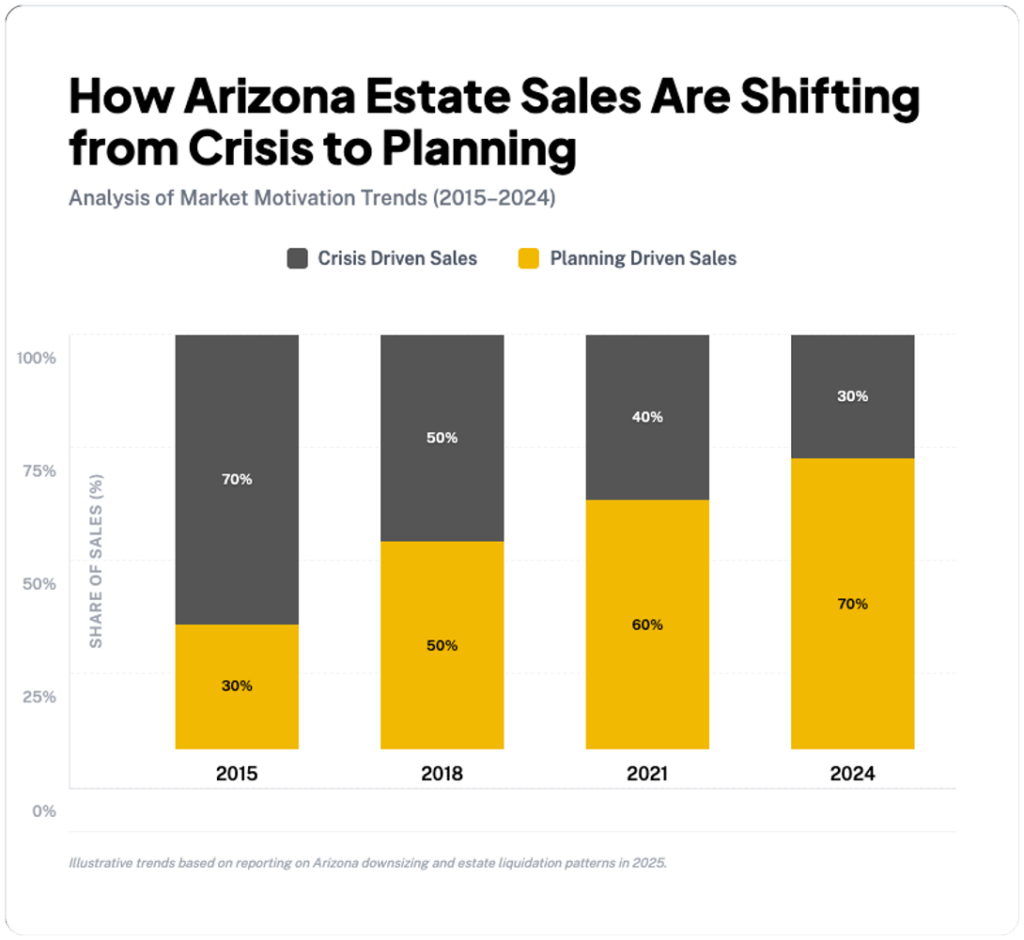
In many Arizona neighborhoods, estate sales were once seen as something that happened only after a crisis. A sudden loss, a rushed move, or an overdue cleanup would trigger a sale that felt more like an emergency than a plan. That picture is changing. More families are now using estate liquidation as a deliberate planning tool, timed around retirement, relocation, and multigenerational living rather than only around emergencies.
Why Households Are Rethinking Downsizing
A recent LivePositively feature, Why Downsizing and Estate Liquidation Are Increasing Across Arizona in 2025, highlighted how rising living costs, lifestyle changes, and relocation pressures are pushing residents to rethink how they manage a lifetime of belongings. Instead of waiting until circumstances force a rushed sale, many households are deciding in advance what to keep, what to pass down, and what to sell locally.
Changing the Conversation Around Estate Work
That shift begins with how people talk about estate work. In conversations with real estate agents, financial planners, and move managers, downsizing is no longer presented purely as a loss. It is framed as a way to align possessions with current needs rather than past habits. For Arizona residents who arrived with large homes and full garages, this can mean acknowledging that certain items have more value as liquidity or donated goods than as boxes stacked in storage.
Learning from Past Experiences
Families are also becoming more aware of how much time an unmanaged estate can consume. Adult children who have already handled a chaotic cleanup for a parent often share their experience with friends and colleagues. They describe weeks spent sorting papers, hauling furniture, and debating what to do with objects that no one really wants. Those stories have become a quiet warning, prompting some households to start planning their own transitions years earlier.
Partial Liquidation as a Strategy
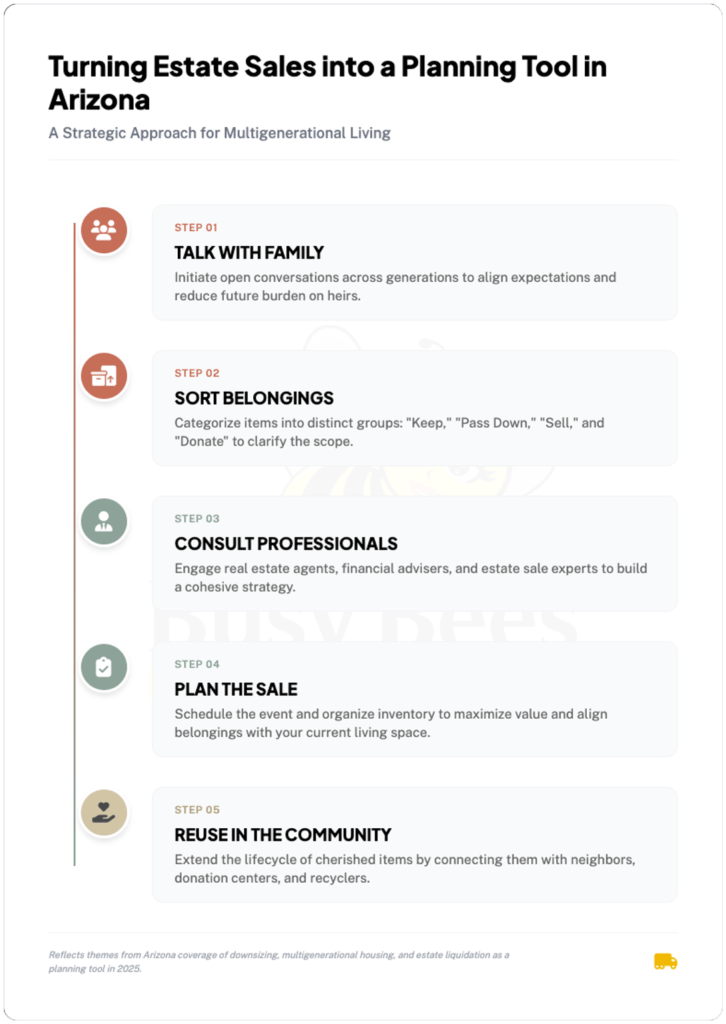
Estate sale companies in the state say they are seeing more calls from people who are still living in their homes and are healthy, but who want to simplify before a future move. These clients may request partial liquidation events targeting specific categories, such as furniture, collections, or workshop items. The goal is not to empty the house but to reduce the volume of belongings that would otherwise become a burden for relatives later.
Professional Guidance and Local Preferences
The LivePositively article noted that structured local services can make these efforts more manageable. Providers who understand Arizona buyer preferences help owners prioritize which items are likely to sell and which might be better handled through donation or recycling. This guidance can turn a vague intention to declutter into a concrete plan with dates, tasks, and expected outcomes, which reduces the chance that downsizing will be postponed indefinitely.
Blending Legal Planning and Practical Action
Another change is the way estate planning and estate liquidation are increasingly overlapping. Attorneys and financial advisers now sometimes raise practical questions about physical belongings during conversations about wills and trusts. Rather than leaving everything to be decided later, clients may record their wishes for particular items or designate that certain categories should be sold to support care, relocation, or charitable gifts. This blend of legal planning and practical liquidation helps families avoid disputes when the time comes to act.
Multigenerational Living and Space Management
Multigenerational living is also influencing how estate sales are used. In homes where grandparents, parents, and adult children share the same property, there may simply not be enough room for all the furniture, décor, or equipment that accumulates over time. Instead of pushing unused items into spare rooms or rented storage, some households organize periodic sales to keep possessions in step with the actual number of people who live under the roof.
Estate Planning in Retirement Communities
In Arizona retirement communities, the planning mindset manifests differently. Residents who know that a move to assisted living or a smaller unit is likely in the coming years sometimes schedule an estate consultation alongside medical or financial checkups. They ask what a full liquidation might look like, how long it would take, and what could be done in stages. Even if they do not act immediately, they gain a clearer sense of the effort required and can prepare themselves and their families emotionally.
Common Client Patterns
Local estate professionals describe three common patterns among clients who treat liquidation as a planning tool. The first group consists of older homeowners who do not want to leave a complicated burden for their heirs. The second includes couples or individuals who intend to relocate to another state and do not wish to transport large volumes of low-value items. The third involves families combining households and needing to remove duplicates before moving in together.
The Importance of Family Communication
In every case, communication is essential. When heirs or future decision-makers are included in the planning stage, they can express which items matter to them and which do not. That knowledge helps professionals set aside heirlooms and focus the sale on goods that no one in the family plans to keep. It also reduces the risk that a sentimental item is accidentally sold or discarded.
Emotional Preparedness
The article on LivePositively highlighted the emotional weight that often accompanies estate decisions. By moving some of the work earlier on the timeline, families can process those emotions gradually rather than all at once in the wake of a crisis. They can tell the stories behind cherished objects, choose symbolic items to keep, and let go of things that no longer serve their lives today.
Benefits for Real Estate Transactions
Real estate agents in Arizona say that sellers who tackle estate planning early often experience smoother home transactions. A decluttered property photographs better, shows more clearly, and can be readied for listing on a more predictable schedule. Buyers are less likely to be distracted by full closets or crowded garages, and inspectors have easier access to critical areas such as attics and utility rooms. These practical advantages further motivate planning.
Contributing to the Community
There is also a community dimension. Estate sales place well-maintained items back into circulation at local prices, which can be a benefit in regions where newcomers are furnishing homes on limited budgets. Tools, kitchenware, outdoor furniture, and hobby supplies often find second lives with neighbors. This reuse can feel less wasteful for owners and helps reduce the amount of material that ends up in landfills.
Looking Ahead with Intention
For Arizona households considering their next chapter, the message that emerges from current practice and coverage, as in the LivePositively article, is straightforward. Estate liquidation does not have to be a rushed, painful event that arrives without warning. With planning, communication, and support from local specialists, it can become a structured process that supports financial goals, eases family stress, and allows belongings to move on to new uses at the right time.
Rewriting the Narrative of Estate Sales
In that sense, the estate sale is moving from the final page of the story to an earlier chapter. Instead of serving only as a reaction to loss, it is becoming part of how Arizona families design their later years, their living arrangements, and their legacy.

The macro analyst desk brings highly sought after financial news based on market analysis, insider news and company filings.